Preface to this blog:
I have been planning and thinking about this topic for months, and it just so happens that when I want to sit down and write this piece, we are in full doomsday mode. But hey, I guess the shelter-in-place order means there’s more time for reading, right?! And, being locked up at home, having to get creative with meals and entertainment, means there are more opportunities to address this topic… right…? (Can I get a hushed “yes” or a virtual nod from all my readers, please? I don’t want to be alone here.) Plus, this is one aspect of our lives that we have some control over right now.
With that said, I think I have my fellow control freaks’ full attention! And, I’m starting to believe that this blog topic worked out exactly when it was supposed to (minus the whole actual doomsday, and there’s-a-virus-and-a-toilet-paper-monster-on-the-loose, thing).
Oh, shoot. One more thing – in case you didn’t know, I’m not a doctor. (I know, shocking, right?) What I am sharing are things I’ve learned, am interested in, and changes/practices I’ve implemented in my own life. I am planting a seed, hoping it resonates with you and sparks a desire to continue educating yourself, making positive changes for you and your family.
Okay, enough of the jibber-jabber. On to the gritty stuff:
Our world is so uncertain right now.
The panic, fear, and survival-mode reverberating through our society is tangible.
Eyes are glued to the news and social media, waiting for the next gut-wrenching update. While there is a collective sense of worry, the specifics bounce from: “How will I stay healthy?”; to: “How will I keep my family healthy?”; to: “Am I going to be able to provide for my family? What about my bills?”; and even the: “Holy shit, what do I do with my children for the next two months?”
What does this roller coaster of emotions and stress do to our bodies? How do we protect ourselves (never mind the Clorox and toilet paper we have stashed in the spare room)? How do we support our bodies so we are the best versions of ourselves for our family and friends?
Now, while some say I have a hippy streak, I like to think I also have some roots in realism. I don’t believe the end-all-be-all solution to this crisis is to huff oils, pass the peace pipe, have a kum-by-yah moment, and forget all worry (although that would help some people to chill the hell out). I am however suggesting there is a more holistic lifestyle approach, with very real results, that can be taken to protect ourselves, and our family’s, mental, emotional, and physical health.
And it starts with our gut.
The word gut tends to have an icky connotation. I used to associate it with: “Gosh, I wish mine was smaller”, or, “Ugh, another gut ache! I get these almost everyday”. Over time, I have redefined “gut”, and now relate it to: the epicenter to my emotional, mental, and physical well-being; my second brain; a diverse ecosystem of living things, in which to feed, nurture, and tend to.
(Woah. Okay hippy lady…)
Before I start to explain myself and those rather crunchy thoughts, let’s ask Merriam Webster to define a couple things for us (it will help set the foundation to build the rest of the conversation):
Gut: bowels, entrails; digestive tract; the inner essential parts; fortitude and stamina in coping with what alarms, repels, or discourages.
Microbiome: a community of microorganisms (such as bacteria, fungi, and viruses) that inhabit a particular environment and especially the collection of microorganisms living in or on the human body; the collective genomes of microorganisms inhabiting a particular environment and especially the human body.
I also find infographics and visuals to be helpful in putting our gut and microbiome into perspective. Here’s a great one:
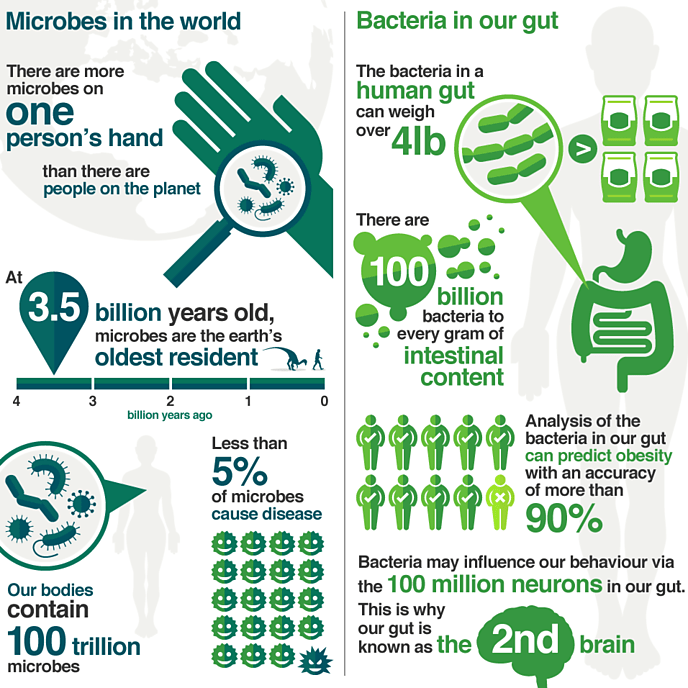
Without a doubt, our gut is a very diverse thing. Research and data on the gut, microbiome, and this idea of “gut health”, have historically been very limited. Only in recent years have doctors and researchers really dug into the complexity of the gut and microbiome. The more research and studies are conducted, the more we are learning that their is a deep connection between what is happening in our gut, and the state of our emotional and mental health, and physical resiliency and strength. I will admit, I was absolutely fascinated when I heard the following soundbites:
- Babies born vaginally are able to better process and handle stress later in life. (Well shit, this may explain a lot.)
- Children with autism almost always have compromised/imbalanced guts.
- Researchers are connecting mental disorders and diseases with compromised/imbalanced guts.
- Over 90% of our microbiome (our ecosystem of bacteria and bugs) is found in our gut.
- “70% of [our] serotonin is made in [our] gut” – Dr. Frank Lipman
- Antibiotics wipe out our diverse microbiome. While they can be necessary to kick an infection and rid our body of bad bacteria, antibiotics also clear out the good bacteria. When we take antibiotics and eliminate our microbiome, we become more suceptible to future infections and bad bacteria. This can become an endless cycle of sickness and dependency on antibiotics, making it critical that we replenish our microbiome with good, diverse bacteria.
And that’s just the tip of the iceberg (aka, the facts that have stood out to me and what I could recall off the top of my head!). Another interesting graphic I found that helps explain this complicated connection:
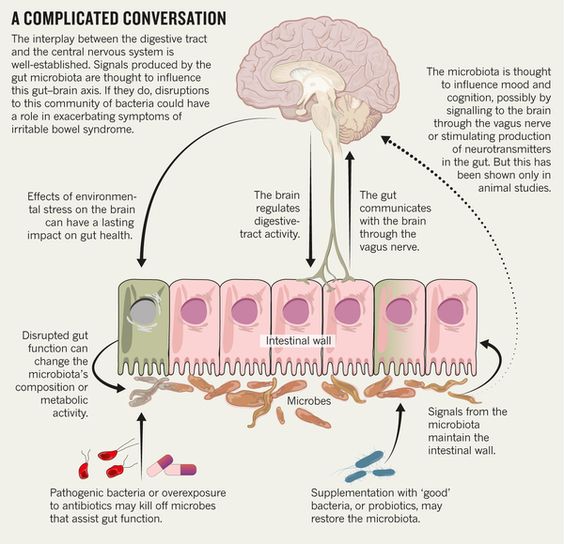
I am constantly amazed at everything the gut does, and how it effects our entire being. I love broadening my knowledge on the topic, and lean on a few different sources to learn more. I follow a few doctors on Instagram, where they highlight key points, data, studies, and information. I also lean on Pinterest for visuals. I find it is oftentimes sometimes easier to break down the information and understand when you see it visually. Obviously you need to vet the accounts you’re following and the information you’re absorbing to ensure it is a reliable source, but social media and apps have made it so much easier to get snapshots of information. They help “plant the seeds” to dig in deeper on our health and wellness. I also find they are amazing reminders to stay cognizant of what I’m putting in/on my body.
In addition to social media and generally searching topics on the internet, I also listen to podcasts. Podcasts are a great way to obtain information from renown scientists, doctors, and researchers (plus they give you sense of productivity while you’re driving the open road!). In the past I have had a hard time getting into podcasts and following the information, but I find I easily get hooked on the topics and guest speakers surrounding gut health, which helps me stay tuned in. Podcasts are where I learned the majority of the gut health information I’ve shared thus far. Some of the gut health/general health podcasts I like to listen to are:
- The Doctor’s Farmacy with Mark Hyman M.D.
- Gut Health Gurus Podcast
- Broken Brain Podcast with host Dhru Purohit
- Mushroom Revival Podcast
Okay, so now we know about the gut. Now what? The importance of a diverse microbiome and healthy gut is apparent, but what can we do to influence it? The great thing about our gut and microbiome, is that we are in the driver’s seat (in most circumstances, yes there are some gut issues not so easily fixed). Every decision you make when putting something into, or onto, your body, helps dictate your gut and microbiome health and diversity. A few of the things I focus on to grow and take care of my gut and microbiome, are:
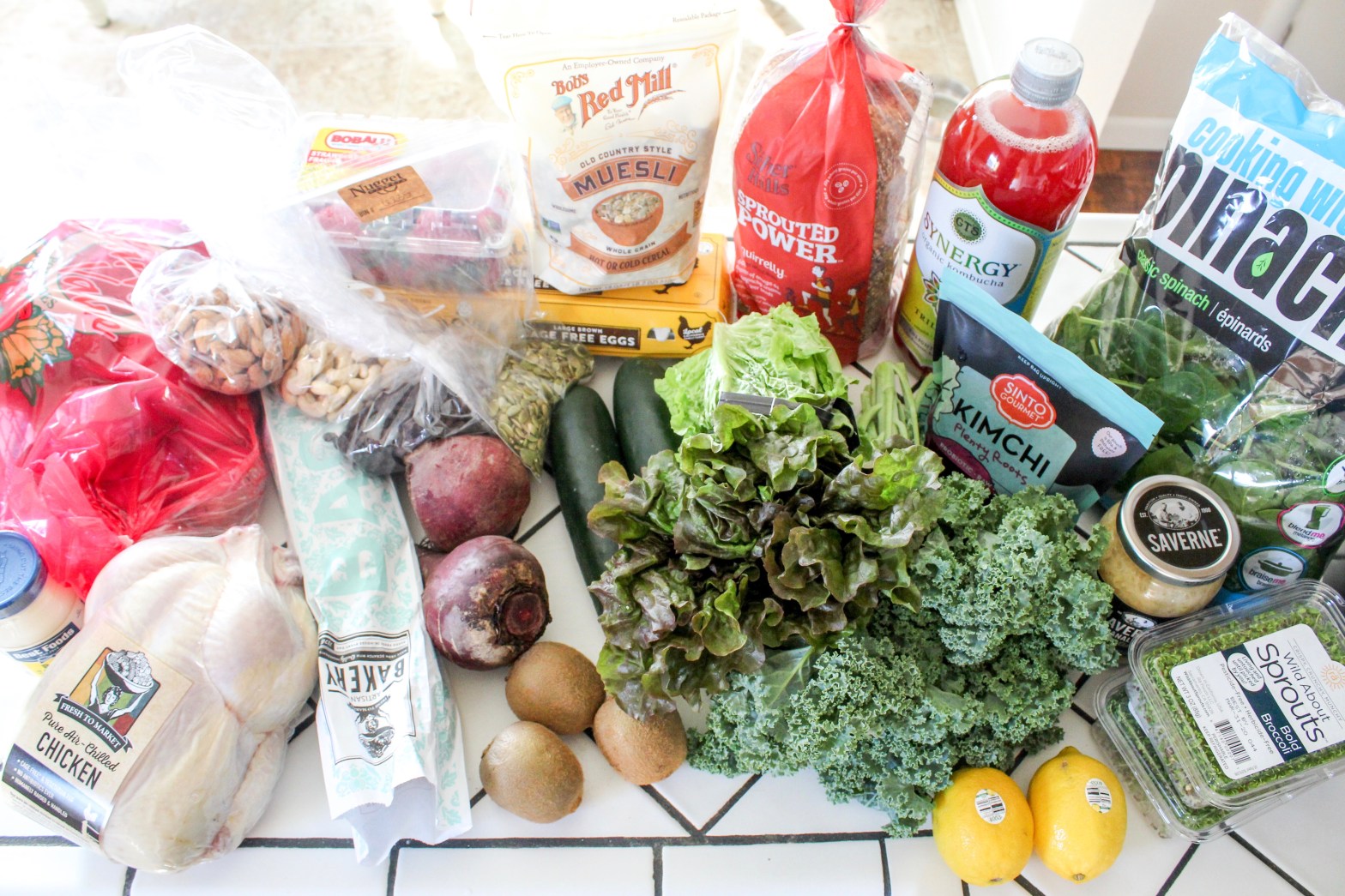
- WHOLE foods. Not the place, but rather the perimeter of the store. I read ingredient panels (or lack there of – fresh veggies and fruits don’t need labels!), and veer towards foods that are unprocessed, or as minimally processed, as possible. The closest I can get food to its natural state, the better. My belief is that I want to get all the nutrients I possibly can from food, not supplements or additives. Nutrients from wholesome, unprocessed foods are more bioavailable for my body to utilize, they lack chemicals that can wreak havoc on my systems, and they help grow and diversify my microbiome. When choosing whole foods, I also seek out local foods as much as possible (I’m a localvore.).
- When I do take supplements, I make them count. For example, I use Mushroom Revival’s Mush 10 Powder. I know I won’t consume the array of mushrooms they include in this powder on a daily basis, but I still want the range of benefits that these mushrooms provide. So, I add a scoop of this powder to my coffee. I also take liquid (faster absorption) B12, and Magnesium Glycinate. With my hectic schedule, I’ll take all the energy I can get. B12 you’re up to bat! I also choose to supplement magnesium because women are generally low in this nutrient, which is a critical nutrient for cognition, muscle, and bone function. I purchase Nugget Markets private label for my vitamin supplements because they are a brand/store I truly trust. They are also a one-stop-shop for all my food and wellness needs.
- Next up, I add in some prebiotics. Prebiotics are: “foods (typically high-fiber foods) that act as food for human microflora. Prebiotics are used with the intention of improving the balance of these microorganisms. (Mayo Clinic). Another Mayo Clinic article describes prebiotics as being: “found in many fruits and vegetables, especially those that contain complex carbohydrates, such as fiber and resistant starch. These carbs aren’t digestible by your body, so they pass through the digestive system to become food for the bacteria and other microbes” (Mayo Clinic). A few prebiotics in my diet include: dried fruits (figs and raisins), kale, spinach, carrots, sprouted whole grain bread, and sweet potatoes.
- And you can’t have prebiotics without probiotics. These are “foods or supplements that contain live microorganisms intended to maintain or improve the “good” bacteria (normal microflora) in the body” (Mayo Clinic). These are probably more familiar to most of us, as they’ve gotten more hype over these years. I consume probiotics through Alexandre Family Farms Yogurt, kefir, sauerkraut, and kombucha
- While fermented foods can get absorbed into one of the above categories, I like to call them out specifically. I enjoy consuming them (yes beer does fall under this category and I’m not sorry about it), and know they do a lot for my gut health. They’re flavorful, and often add diversity to what would be another boring, healthy meal. (I love scrambled eggs with spinach over sprouted toast, and a healthy serving of sauerkraut and broccoli sprouts on top.) In addition to beer, sauerkraut and kombucha are my most frequent fermented foods, with kimchi on occassion.
- I also make an effort to cook/prepare as many foods as I can. Especially those that would normally be heavily processed, and are actually easy to make yourself. There are so many foods we can quickly make at home with pure, wholesome ingredients, but because society has become so convenience driven, we rely on a store shelf to stock them. Some of the items I like to make myself are: salad dressings, granola, sauces (particularly Alfredo sauce), applesauce, guacamole, and bone broth. Not only are they simple to make, they’re also often cheaper and more flavorful.
- A love that my parents taught me – growing my own food. Yes, you know exactly where your food came from, how it was grown, and you’re being self-sufficient, but the simple act of being outside in the sunshine (getting your Vitamin D!), having your hands in the soil (great for diversifying your microbiome), and engaging in a calming, stress-relieving activity, are all great for your gut health and general well-being.
- I also love carving time to work out. I think we can all agree our bodies need to be moved, and for me it is an important form of stress, emotional, and spiritual management (remember, emotional and mental health effect the gut, too!).
- Last up, our microbiome is dependent on what you put in your body, but also what goes on it. No matter the veggies juices, yogurt, and kombucha you’re consuming, if you’re caking your skin with toxic junk, your microbiome is still not going to be functioning at its best. Over the course of the last year I’ve spent a lot of time transitioning to a more non-toxic lifestyle. Some of my non toxic living, also serves as preventive “medicine” so I can avoid microbiome depleting antibiotics as much as possible. Some of the past blogs that touch on this, are: Essential Everything and Tried running, now I’m swapping.
Wow. A lot of stuff to take in. But, you can see how fun and easy gut health can be for you and your family! And the countless benefits. Our gut is our first line of defense, which is more important now, than ever before. So, let’s spend time in the kitchen with our family getting creative, planting a garden together, and getting outside for fresh air, sunshine, and exercise. In return, we’ll have greater immunity and resiliency to illness, we’re setting ourselves up to have a positive attitude as we navigate this new norm, and we’ll be better able to handle increasing levels of stress.
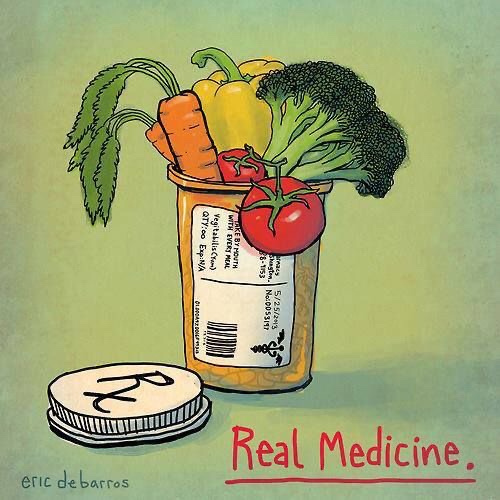
I hope this blog got you interested in yours and your family’s gut health, and that you take this house-bound opportunity to create new habits focused on supporting your microbiome. I’m going to close this blog with a clink of our fresh, veggie juice glasses, and a cheers to our health and families. I’m also including this image. I think it speaks for itself –
I’d love to hear what you think about this blog, please leave a comment, question, or any helpful information you’ve learned, below!
 Beer in a Martini World
One thought on “Gut check”